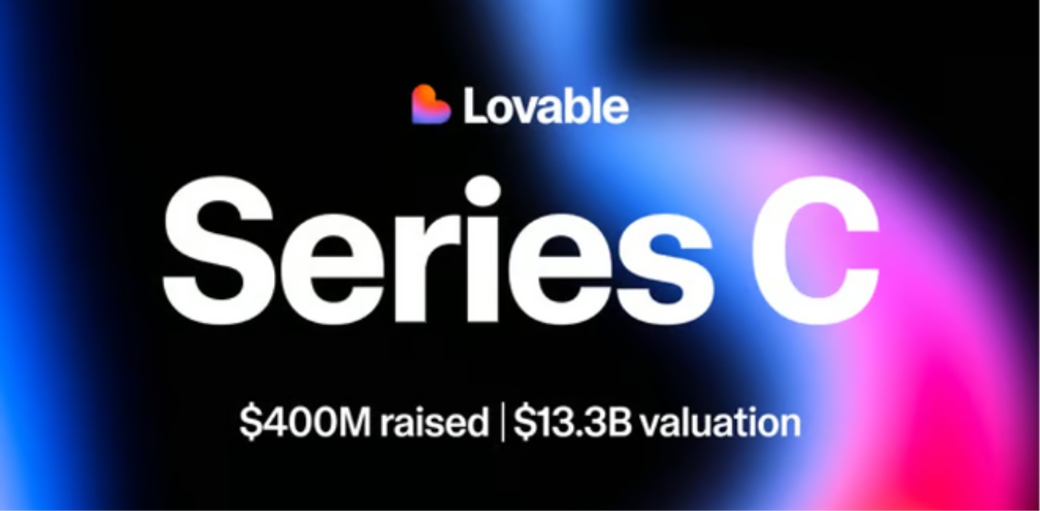
Lovable has raised $400 million at a valuation of $13.3 billion.
The more interesting number is $500 million in annual recurring revenue, reached at a speed few companies in the category can match.
That revenue is not coming from hobbyists.
More than two-thirds of Fortune 500 companies now have employees using the platform in some form.
What those employees are doing with it should worry a large part of the enterprise software industry.
One internal team used Lovable to replace ten existing applications, saving roughly $1 million a year in licence costs.
At Nursa, a product executive used it to launch a nurse education and certification service rather than commissioning one.
This is not developer tooling.
It is a substitution threat aimed at the long tail of workflow software that companies buy because building it was previously too much trouble.
The economics of that tail were always fragile.
Vendors charged annual fees for products whose core function was a form, a database and some permissions logic.
If a competent operations manager can now assemble that in an afternoon, the fee is hard to defend.
Lovable's own commercial model reflects where the value has moved.
The company began as a self-serve tool and is now signing formal enterprise contracts, which sell governance rather than capability.
What chief information officers are paying for is control over data access, assurance that the resulting applications are secure, and connection to internal systems.
That is a mature product instinct, and it is what turns shadow adoption into budgeted spending.
The technical strategy is similarly unsentimental.
Lovable routes requests across the three largest commercial model providers and its own adapted open-weight models, choosing whichever suits the task.
Speed-sensitive work has tended towards Google's Gemini.
The share of tokens running on the company's own post-trained models is rising.
For a business built on other people's models, that shift matters, because it is the only route to owning a gross margin.
The obvious caveat is that Lovable is not profitable and says profitability is not the current objective.
Growth-stage companies are entitled to say that, and it has been briefly profitable before.
But a $13.3 billion valuation prices in something more than fast revenue.
It prices in the assumption that applications built this way will still be running, maintained and trusted in five years.
Nobody yet knows what a large organisation's estate of thousands of generated applications looks like when the person who prompted them into existence has left.
That, rather than the valuation, is the question the next funding round will have to answer.